
July 21, 2025: 5 years, transplant, and an ironic love for cooking
I “celebrated” twenty-two in the transplant ICU this year. Septic, hooked up to norepinephrine and a slew of antibiotics, we sang happy birthday to a pan de sal brought in by my tita — complete with an (unlit) candle. The nurses and doctors sang happy birthday (complete with a surprisingly coordinated dance number), and my sister managed to find the most ridiculous birthday balloon to brighten up the room. Despite being a far cry from what I had originally envisioned turning twenty-two looking like, I do not think I could’ve asked for a more perfect celebration.
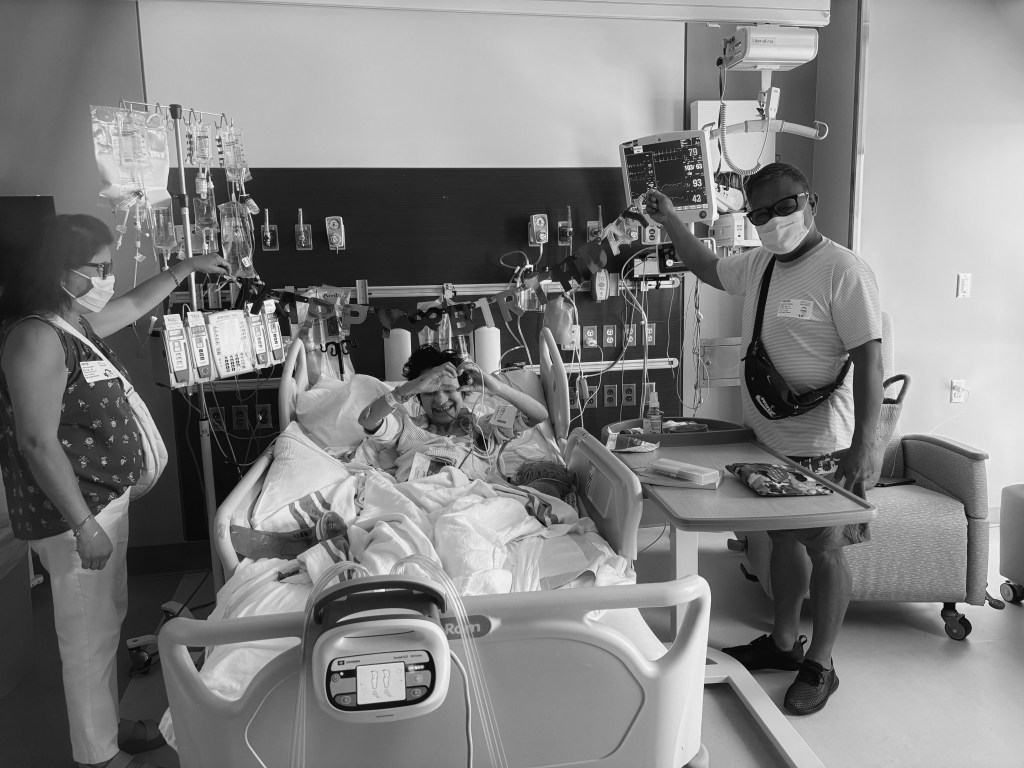
The past five years have been humbling, as I have navigated the progression of intestinal failure and the hard conversations the diagnosis has brought with it. There is no promises that can be made; no guide or step-wise manual on what to do when the surgeries and medications don’t work. After my two week “birthday hospitalization”, my mom and I sat across from my transplant surgeon to discuss my options. I’ve made peace with the fact that I may never get fully comfortable with discussing my death, especially in the distant, clinical approach much of modern medicine attempts to navigate with. Laid out before us is over four years of my life: surgical reports, CT scans, biopsy results — the list goes on. We are all in uncharted territory, and as my surgeon begins to rattle off the numbers of median survival rates on TPN (five years, and often complicated with liver failure and infections) versus the poor prognosis of intestinal transplants, I begin to question how much further I’m willing to go.
- Fact: In 2024, only 82 intestinal transplants were performed across the U.S.
- Fact: Graft survival rates at one year were 74%. By year five, the rate was 42%.
- Fact: Intestinal transplants are an intervention of last resort.
- Fact: I am at the point of last resort.
It’s July now. I write this while sitting in my hospital bed on the transplant step-down unit, nearly a week out from emergency surgery for a bowel obstruction. I still have very few answers — fewer than I had when this whole journey started five years ago.
There is both a beauty and a grief to this life’s duality; I’ve had the honor of meeting so many incredible and resilient transplant recipients, some even younger than me, who have found ways to find joy and laughter amidst unspeakable suffering. It is through their vibrancy and fierce love for life that I have been reminded of the promise I had made to myself back in May, regardless of whether or not I choose to pursue intestinal transplant. This blog will (hopefully!) be a way for me to hold myself accountable, and serve as a testament to a “life well-lived”; how precious our time here becomes when we realize there is no better moment than the present, and what a blessing that is! That being said, I want to end this first (very ramble-y) post with a revised facts list fitting of my intentions for this project.
- Fact: Intestinal transplants are very novel and very difficult to survive.
- Fact: Surviving on IV nutrition for more than five years is very rare and hard to survive.
- Fact: I have no idea what I am doing, and I am a little afraid.
- Fact: Today, in this blessed and miraculous moment, I am alive. And that is enough.
With love & light always,
Olive
 Open-Hearted Olive